
Sacred Minimal
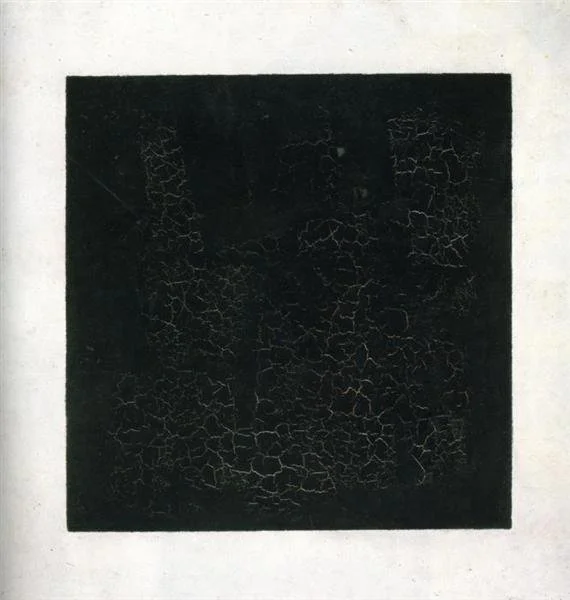
Malevich K.S. (
1878, Kiev - 1935, Leningrad)
Black Square
Circa 1915
On Emptiness That Is Not Really Empty
When we are afraid of empty spaces:
We fill silence with sound.
We fill rooms with objects.
We fill pauses with explanations.
But what if emptiness is not absence?
What if it is an invitation?
In 1915, Kazimir Malevich painted a simple black square on a white background. No perspective. No story. No figures. Just form reduced to its most radical simplicity.
Many people were confused. Some were angry.
How could this be art?
But perhaps the more interesting question is:
How could it not be?
When you stand before a work stripped of decoration, something unusual happens. There is nowhere for your attention to hide. No narrative to follow. No technical detail to admire for long. The mind, deprived of distraction, begins to confront itself.
Minimalist art does not try to overwhelm you.
It waits.
And in that waiting, something subtle appears.
The same thing happens in meditation. When you sit in silence, at first there is restlessness. Thoughts rush in to fill the open space. The ego dislikes the void; it prefers noise. It prefers activity. It prefers to feel necessary.
But if you remain, if you allow the silence to stretch without immediately filling it, the emptiness changes texture.
It becomes spacious rather than hollow.
Alive rather than lacking.
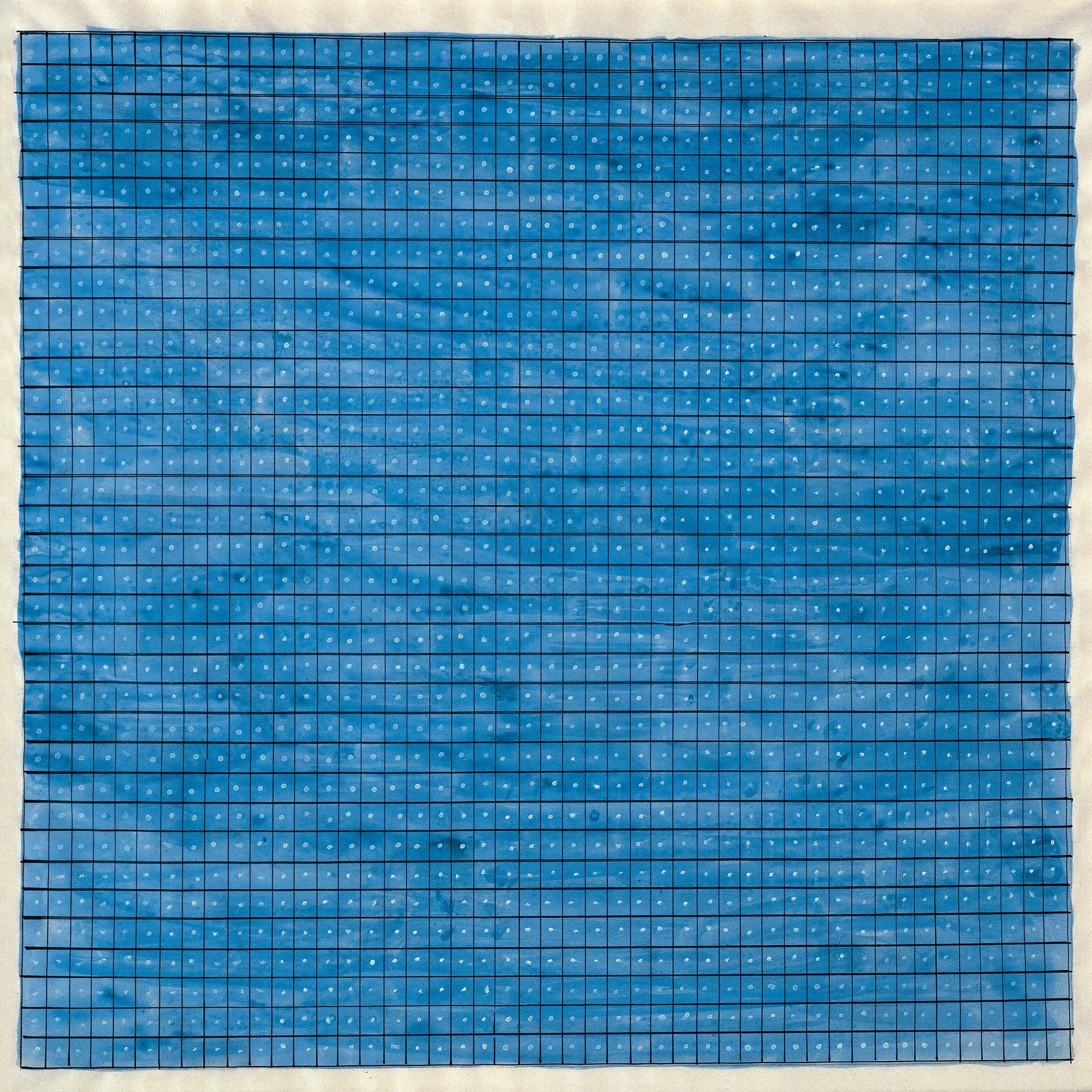
Agnes Martin, UNTITLED, 1965
Artists like Agnes Martin understood this deeply. Her faint grids and nearly invisible lines do not shout for attention. They ask for devotion. To look at her work is almost a spiritual discipline. You must slow down. You must soften your gaze. You must allow subtlety to reveal itself.
In this way, minimalism is not about less for the sake of less.
It is about removing what is unnecessary so that what is essential can breathe.
Many spiritual traditions speak of this same movement. The stripping away of excess. The quieting of the mind. The relinquishing of ego. Not as punishment, but as clarification.
When nothing extra remains, what is left?
Presence.
The Sacred Minimal begins here — in the recognition that reduction can be a form of reverence. That simplicity can be a gesture of humility. That space can be sacred.
We live in a culture of accumulation. More images. More opinions. More stimulation. More speed. We are trained to equate fullness with value.
But fullness is not always richness.
Sometimes richness appears only after subtraction.
A blank wall.
A single tone.
A repeated line.
A held breath.
These are not empty. They are thresholds.
To stand before a minimalist artwork is to practice attention. To resist the urge to move on. To let the surface remain simple while your perception deepens.
This blog is an invitation to that practice.
Not to analyze art into exhaustion.
Not to decorate spirituality with theory.
But to sit with form, silence, and space — and notice what emerges.
So I leave you with a small experiment.
Today, remove one unnecessary thing.
A word.
An object.
A distraction.
Then pause.
What remains when you stop filling the space?
And could that remaining presence be enough?
