
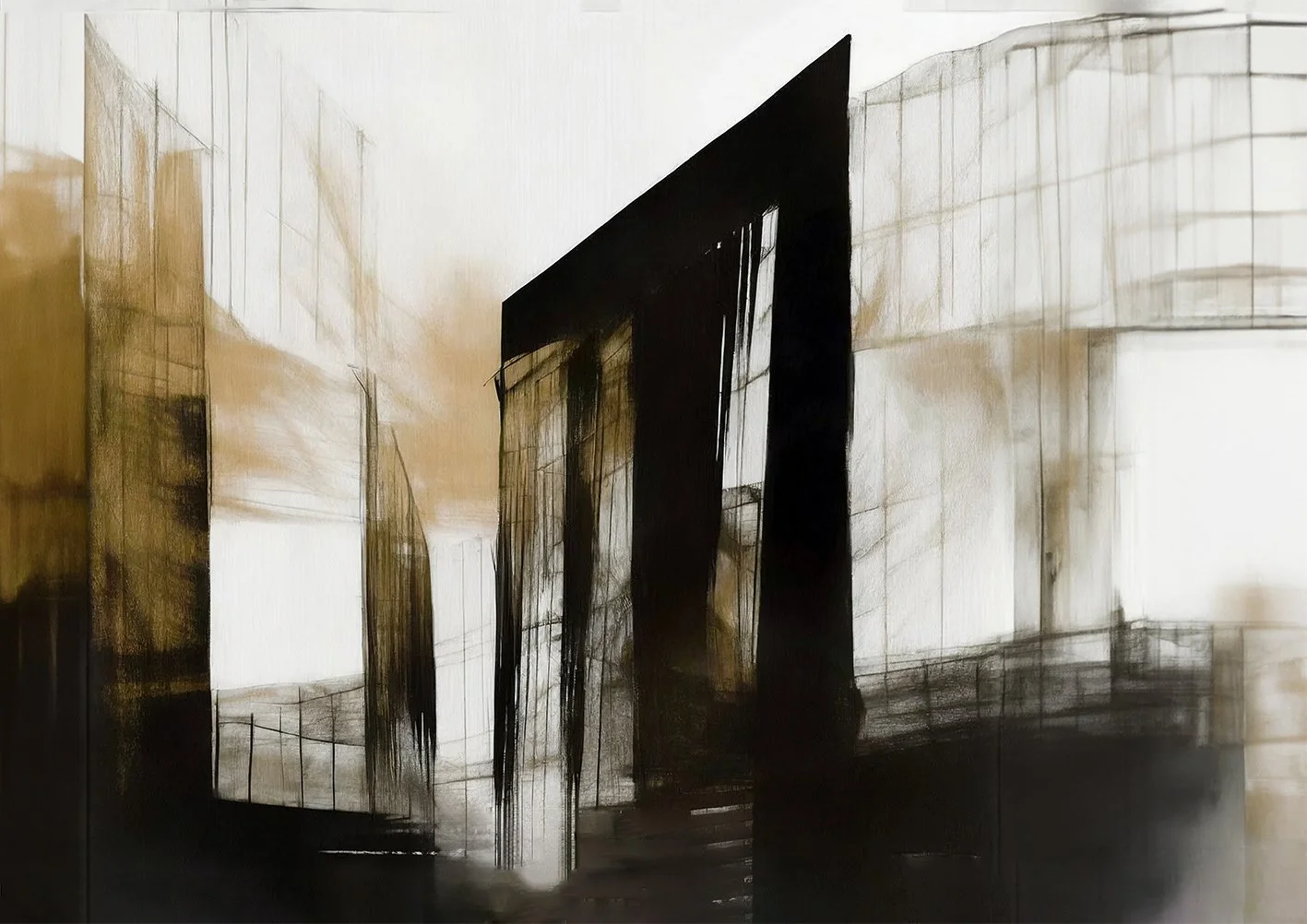
Unsettled Spaces Project (Series) – Àlex Reig (2024)
We are a species of cosmic contradiction. We look at a chaotic world and, by some ancient instinct, feel a desperate need to tidy it up. We stack stones to build cathedrals, write lines of code to automate our lives, and weave complex social webs to ensure we never have to stand alone.
At our core, humans are driven by a triad of urges: to build, to connect, and to create order. Yet, the more we lean into these ambitions, the more we expose the very thing we try to ignore—the beautiful, terrifying fragility of everything we touch.
The Biology of Order: Why We Can’t Stop
Our obsession with order isn't just a hobby; it’s a survival mechanism. To our ancestors, chaos meant a predator in the tall grass or a sudden change in the weather that could end a tribe. Creating order—mapping the stars, seasonal farming, or building a fortified wall—was the difference between life and death.
Today, that drive has evolved into a Meaning-Making Machine. We organize our bookshelves by color, our days by calendar alerts, and our societies by increasingly complex laws. We do this to create a "predictable world." There is a deep, neurological relief in knowing what comes next. By imposing order, we feel, however briefly, like we are in the driver's seat of a chaotic universe.
The Architecture of Connection
Building doesn't always involve brick and mortar. Our most ambitious structures are the invisible ones: Relationships, Traditions, and Communities.
We build these connections to defy the isolation of the individual experience. We create "systems of belonging" that are meant to outlast us.
• The Family Tree: A living structure built across generations.
• The Shared Mythos: Cultures and stories that act as the "glue" for millions of strangers.
• The Digital Hive: Our modern attempt to connect every human brain into a single, seamless network.
But here’s the rub: the more people involved in a structure, the more "points of failure" it has. A single broken heart, a misunderstood word, or a shift in cultural values can bring a decades-old connection crashing down.
The Complexity Trap
There is a strange irony in human ambition: Progress often increases fragility.
In the ancient world, if a stone bridge collapsed, the village was inconvenienced. In the modern world, our "order" is so interconnected that a glitch in a piece of software in one country can ground flights across the globe and halt the delivery of life-saving medicine.
We have traded resilience for efficiency. We build lean, "just-in-time" systems that are marvels of order, yet they are as brittle as glass. We live in a world where:
• A solar flare could theoretically wipe out the digital history of the 21st century.
• A change in a social media algorithm can dismantle a business built over a decade.
• A single line of bad code can "un-build" a financial system.
The more sophisticated our order becomes, the more spectacular its potential collapse.
The Shadow of Impermanence (Ozymandias was Right)
We are haunted by the "Ghost of the Future." Every time we lay a foundation, we are subconsciously aware of the weeds that will eventually grow through the cracks. This is the Impermanence Shadow.
Percy Bysshe Shelley famously wrote about the ruins of Ozymandias—a "King of Kings" whose giant statue sat decaying in a desert of nothingness. The message wasn't just that power fades; it was that the desire to build something permanent is a uniquely human delusion.
The Audacity of the Builder
If everything is destined to fade, why bother? Why spend years writing a book, decades raising a family, or centuries building a civilization?
The answer lies in the dignity of the effort. There is a profound beauty in the human urge to create order in the face of certain entropy. It is our way of saying, "I was here, and for a moment, I made the world make sense."
When we acknowledge the fragility of our ambitions, they actually become more valuable. A connection that lasts forever is a commodity; a connection that survives despite its delicacy is a miracle.
"We are all flickering flames, trying to build lanterns that will help us burn just a little bit longer."
Embracing the Sandcastle
Think of a sandcastle. It is the perfect embodiment of this paradox. It requires engineering, vision, and a fierce desire to impose order on a chaotic shoreline. The person building it knows the tide is coming back. They know the water will eventually smooth the beach until it looks like they were never there.
But they build it anyway. They invite others to help. They take photos. They admire the sharp lines of the towers while the spray hits their face.
The beauty isn't in the permanence of the castle; it’s in the audacity of the builder. We are, and have always been, the architects of the temporary. To build something, knowing it will break, is perhaps the most courageous thing a human can do.
We don't build to defeat time; we build to inhabit it. And in that brief window of order we create, we find everything that makes life worth living.
